
There is a specific memory I keep coming back to.
My daughter was nursing. The house was still quiet. I had been following a plan, no snacking between meals, tracking everything, trying to shrink myself back into someone I recognized while my body was doing the most demanding work of my life.
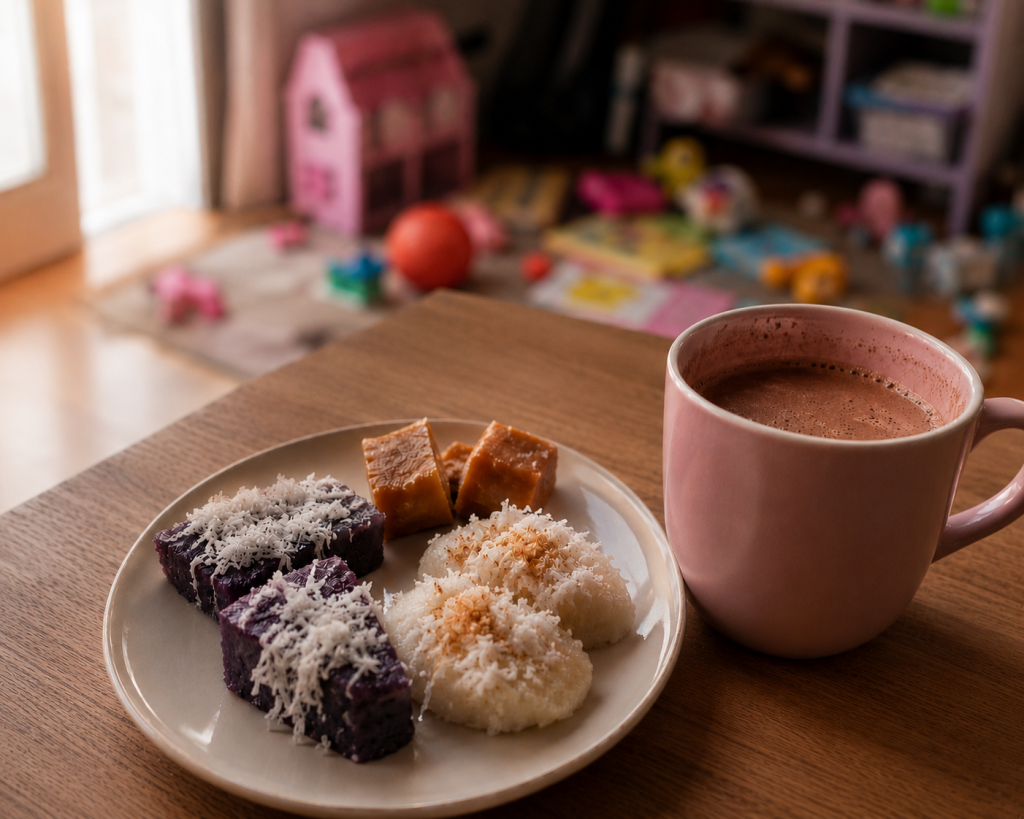
And that morning, I reached for my favorite kakanin.
The plan said I wasn’t supposed to. But my hands were already moving. I made hot cocoa, sat down, and ate slowly, without rushing, without fighting myself for once.
It tasted like warmth. Like something my body recognized before my mind could name it.
I grew up in a home where food was never just food.
Every November 1, the whole family would go to the cemetery to visit loved ones, spreading out together, eating beside the people we were remembering. The mood was somehow both heavy and full of life at the same time. Kakanin when someone came to visit. Tilbok cooked to send off a neighbor going overseas. Extra rice at every fiesta, every gathering, every table where someone wanted to make sure you felt welcome and fed.
It was never just calories. It was how we said: you matter. This day matters. We are here together.
So when I reached for my kakanin that quiet morning, still in my pajamas, my daughter nursing, my plan already broken before 8am, my body wasn’t failing. It was remembering. It was reaching for something that had always meant care.
A calorie counting app would have flagged it. But no app can measure what those carbs were actually giving me.
Here is what diet culture never told me, and what I wish someone had said sooner.
The idea that carbs are something to fear, that sweets are a weakness, that nourishment means eating as little as possible of the things you actually love, that is not health. That is exhausting. And for a breastfeeding mother already running on empty, it was unkindness dressed up as self-improvement.
I was asking my body to do more with less while it was giving everything it had. That is not alaga. That is the opposite of it.
Real nourishment is wider than macros. It includes the memory a meal carries. The comfort of something warm when you are tired. The feeling of sitting down and actually tasting your food instead of eating standing up over the sink. The extra rice you took because it was your lola’s recipe and it tasted like every good Sunday of your childhood.
These things feed something the nutrition label cannot account for. And for mothers who have spent months putting everyone else’s needs first, being fed in that deeper way matters more than we admit.
Reaching for that kakanin wasn’t a slip. It was alaga. The kind that reminds you that you are a person, not just someone who keeps everything running.
So if you have been at war with food, counting, restricting, feeling guilty every time you ate something the plan didn’t allow, I want to offer you a gentler way of thinking about it.
Food is memory. Food is culture. Food is one of the oldest ways we have said to each other: sit down, let me take care of you.
Your body deserves that kind of care too. Not just the responsible kind. The warm, familiar, soul-feeding kind as well.
That is exactly why food is my favorite form of alaga.
Your life is not a project to finish. It’s a home you keep returning to. And every time you sit down to eat something that feeds you, body and spirit both, you are finding your way back.
Your life is not a project to finish. It’s a home you keep returning to.
With love,
Kristen
Start Your Daily Ginhawa
The Ginhawa Starter is a free guide that helps you take one healthy habit and shape it into a small ritual, something that fits your real day and is gentle enough to actually stay.
If you’re craving a little more ginhawa in your everyday, this is a gentle place to begin.
Get Your Free Access →Free. Less than 5 minutes to read.
Free. Less than 5 minutes to read.Yes, I want the guide →