

Can I ask you something?
When you do something for yourself, a walk, a glass of water, five quiet minutes, does it feel like something you genuinely want to do? Or does it feel more like something you’re supposed to do?
There’s a difference. And it matters more than we think.
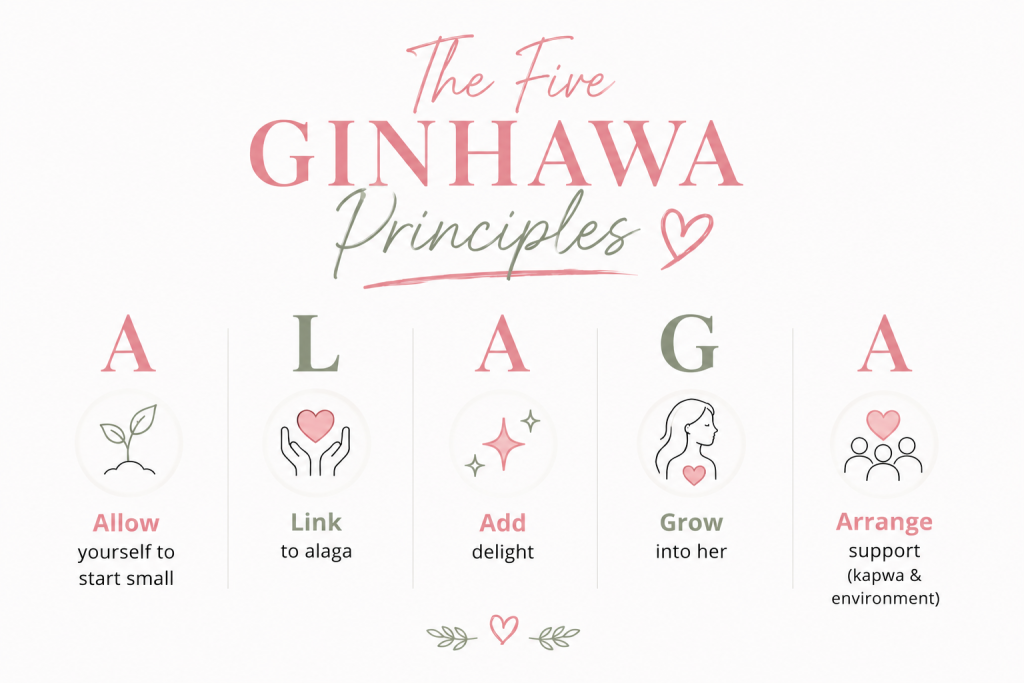
Because starting a habit is only half the work. The other half is staying. And the reason most of us don’t stay isn’t laziness. It’s that we were never truly connected to our own why. That’s what the second Ginhawa Principle is about: Link to Alaga.
Connect what you do to a reason that belongs to you.
Think about the last time you kept a habit without forcing it. Maybe it was small. A cup of tea before the house woke up. A playlist while you’re on your morning walk. A nightly thing that just felt like yours. You didn’t track it. You didn’t need to. You came back to it naturally, not because a calendar reminded you, but because it meant something to you.
That’s the difference between a habit and a ritual. A habit is something you track. A ritual is something you want to return to.
Now think about the reasons you’ve been given for taking care of yourself. Be healthy for your kids. Stay strong for your family. You can’t pour from an empty cup. These things are true. But notice that they’re all about someone else. When the reason lives outside you, it tends to leave the moment life gets hard enough.
What if the reason was simply: because I want to feel good? Because I deserve to feel like myself again?
That shift, from “I have to” to “I want to,” is where alaga actually begins.
I want to tell you about a small shift that changed how I think about all of this.
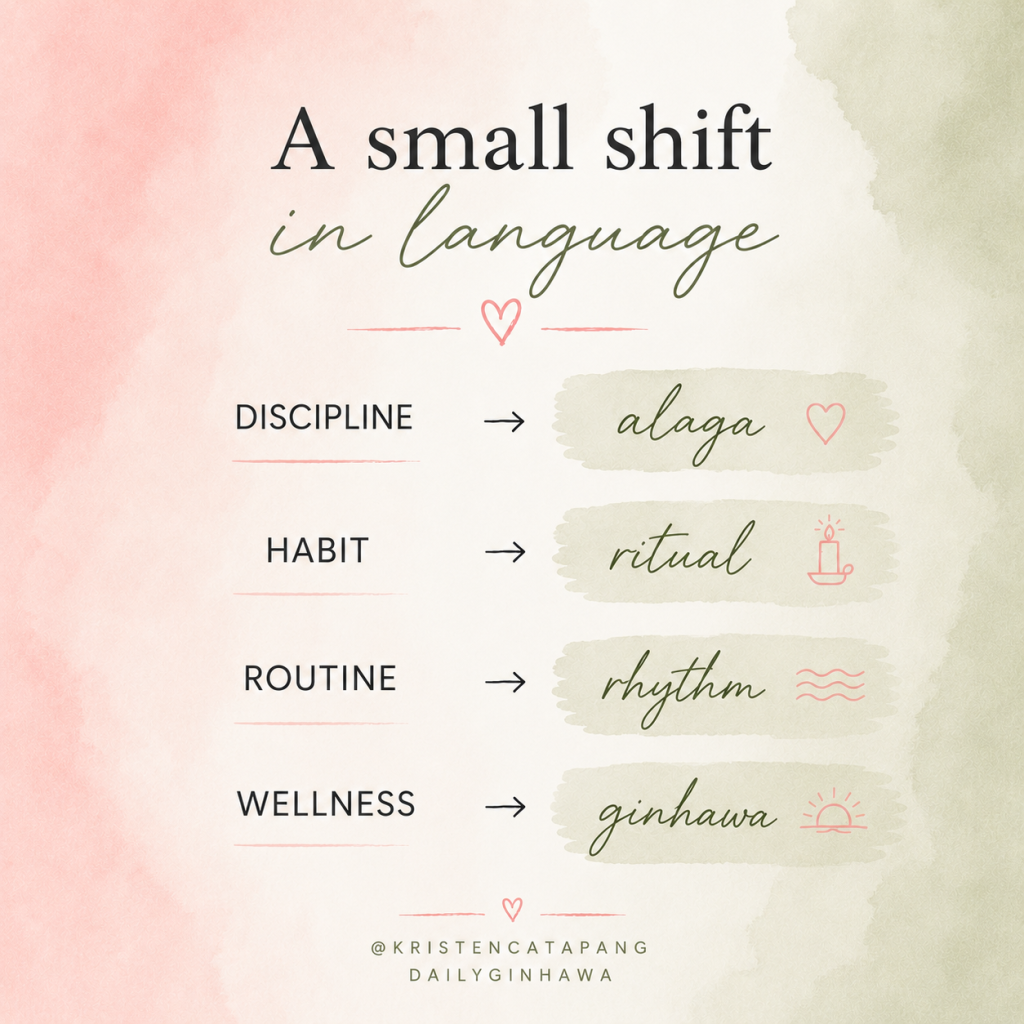
I used to say I needed more wellness in my life. More discipline. A better routine. And every time I used those words, I felt tired before I even started. Wellness felt like a destination I hadn’t reached yet. Discipline felt like a report card. Routine felt like something I kept failing at.
So I stopped using them.
Not discipline. Alaga. Not habit. Ritual. Not routine. Rhythm. Not wellness. Ginhawa.
It sounds small but it isn’t. The words you use to talk to yourself shape how you feel about what you’re doing. Alaga doesn’t demand. It tends. Ginhawa isn’t something you achieve. It’s something you already carry, it just needs room to come up.
When I started taking my supplement every morning, it wasn’t because a program told me to. It was because in that small act I was saying something to myself: I am worthy of care. The supplement was simple. But the meaning I gave it was mine. And that meaning is what brought me back to it, not just on the motivated days but on the hard ones too.
That’s what this principle is really asking. Not to find the perfect habit. But to find the meaning inside the one you already have.
So here’s the question I want you to sit with today.
The small act of alaga you’re doing, or the one you want to begin, what does it mean to you? Not what it should mean. Not what it does for your family or your health goals. What does coming back to it say about who you are and who you want to be?
That answer is your anchor. Because on the days when motivation disappears, and it will, meaning is what stays.
When the reason lives inside you, it stays even when motivation doesn’t.
When the reason lives inside you, it stays even when motivation doesn’t.
With love,
Kristen
Start Your Daily Ginhawa
The Ginhawa Starter is a free guide that helps you take one healthy habit and shape it into a small ritual, something that fits your real day and is gentle enough to actually stay.
If you’re craving a little more ginhawa in your everyday, this is a gentle place to begin.
Get Free Access →Free. Less than 5 minutes to read.
Curious about my morning ritual?
A lot of moms ask me about the supplement that’s part of my morning ritual.
If you’re curious too, send me ALAGA on Instagram. I’d be happy to share. 💗
You’ll land in my DMs when you tap.