
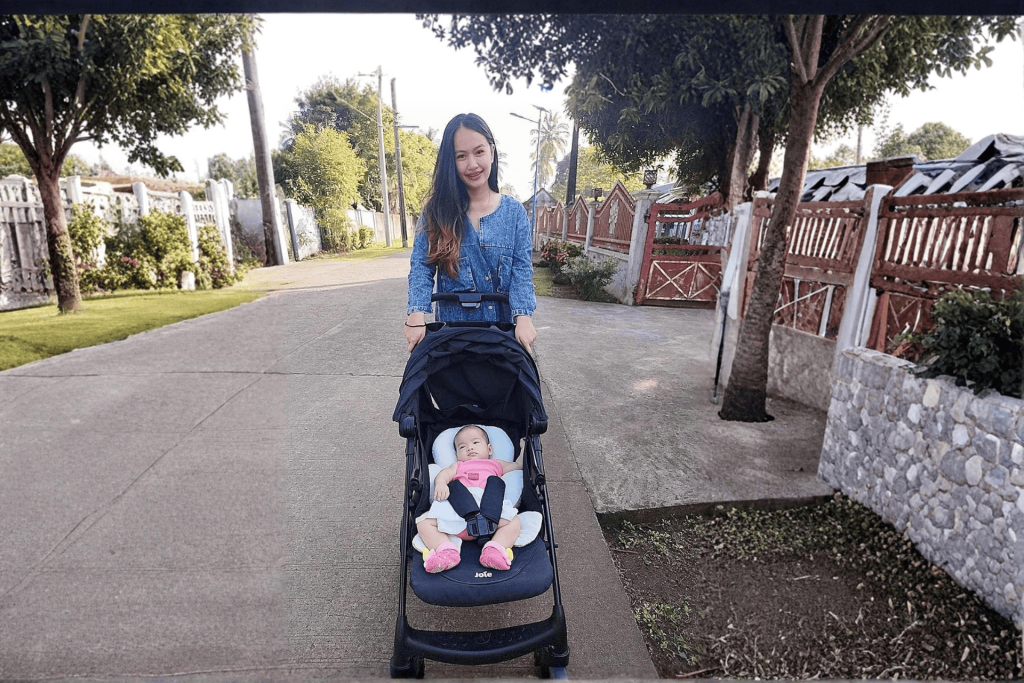
It was a Tuesday morning and I almost didn’t go for a walk.
My daughter was calm for once, strapped into her stroller. I was tired in the way sleep doesn’t fix, the kind that settles somewhere deeper than your body. I had no real reason to leave the house. I also couldn’t bear staying inside it. The walls felt too close.
So I went.
The sun hit my face the moment we stepped outside. My daughter kicked her little feet the way she always did when she felt the air change. Nanay Linda, my husband’s relative who lived right beside us, smiled and asked about my baby.
“She’s good,” I said. And for a brief moment, we were.
Twenty minutes later I came home with one quiet thought: I want to do that again tomorrow.
It wasn’t dramatic. But looking back, it was the first sign that something inside me was beginning to return.
When my daughter was born, I expected motherhood to change my life. I didn’t expect it to change me.
Somewhere between the sleepless nights and the constant caring for my little one, I stopped recognizing myself. Not all at once. Quietly and then completely. I was still me, but motherhood had taken up so much space that I could barely find the rest of myself inside it.
My confidence felt fragile. My days revolved entirely around someone else’s needs. And if I’m honest, I spent that whole season believing I needed to fix myself. A stricter routine. A better plan. More discipline. So I tried. I downloaded programs, made schedules, promised myself that this time would be different.
It never was. The harder I tried to force my way forward, the further I drifted from myself. Push. Exhaustion. Guilt. Repeat.
The turning point came when I stopped asking how do I fix myself and started asking how can I care for myself.
It seems like a small difference. It wasn’t. One question assumes something is broken. The other begins with compassion.
That’s when a small ritual entered my mornings.
Before my hot cacao, before my phone, before the day started asking things of me, I took my supplement and drank a full glass of water. That was it. No elaborate routine. Just one small act that said: today begins with alaga.
In Filipino, alaga means caring for something with patience, gentleness, and consistency. You don’t force a plant to grow. You don’t rush a child to bloom. You tend to them and trust that growth follows. Somewhere along the way I realized I deserved that same kind of care. Not because I had earned it. Simply because I was human.
That small ritual became my first act of alaga each morning. And from it, other things slowly began to grow. A warm breakfast I actually sat down to eat. The walk I almost didn’t take. Not because I’d suddenly found more discipline, but because caring for myself had quietly become easier than trying to fix myself.
What surprised me most was this: the rituals themselves weren’t what changed things. The meaning behind them was. Every morning I returned to those small acts, I was making a quiet decision about who I was becoming. Not a mother trying to get her old life back. Just a mother learning how to care for herself too.
Little by little, something shifted. The fog started to lift. I found myself cooking again, reading again, noticing things I had been rushing past. The morning light on the kitchen floor. My daughter laughing at something only she could see.
Life hadn’t become easier. I had simply become more present for it.
I didn’t have language for what was happening then. I was just living it. Eventually I gave it a name: Daily Ginhawa. Not because I invented something new, but because I finally understood what had been helping me all along.
Ginhawa is a Filipino word for relief. Ease. Breathing space. The feeling of exhaling after holding everything together for too long. Daily Ginhawa became my way of describing the small acts of alaga that create that feeling, not through perfection or discipline, but through gentle, repeated care.
I didn’t build Daily Ginhawa. I lived it first. Then I named it.
So if you’re in a season where you feel heavy, foggy, or a little lost inside your own life, let this be your reminder.
You don’t need to change everything. You probably don’t need a perfect plan. You may just need one small ritual to return to, something small enough that even your most exhausted self can say yes to it.
Because sometimes the smallest acts of alaga become the path back to yourself.
The turning point came when I stopped asking how do I fix myself and started asking how can I care for myself. It seems like a small difference. It wasn’t.
With love,
Kristen
Start Your Daily Ginhawa
The Ginhawa Starter is a free guide that helps you take one healthy habit and shape it into a small ritual, something that fits your real day and is gentle enough to actually stay.
If you’re craving a little more ginhawa in your everyday, this is a gentle place to begin.
Get Your Free Access →Free. Less than 5 minutes to read.
Curious about my morning ritual?
Many moms ask me about the supplement that’s part of my morning ritual.
If you’re curious too, send me ALAGA on Instagram. I’d be happy to share. 💗
You’ll land in my DMs when you tap.